

A delivery arrives. At the receiving bay, a colleague reaches for a mobile phone. Following the purchase-order capture workflow, the next step is to reduce manual retyping of CIPL data into the GRN module. Mobile capture and AI extraction prepare the draft; the receiving colleague checks the goods and validates the receipt.
Documents create a draft
Photograph or upload the Commercial Invoice and Packing List (CIPL). Extract supplier and shipment references, material descriptions, quantities, units and package counts into a draft Goods Received Note (GRN). Keep the source documents available for comparison.
Link the draft to the approved purchase order. Check material codes, ordered quantities and earlier receipts, so a partial delivery does not become a duplicate or an apparent over-delivery. Flag unclear or unmatched lines for correction.
The person checks the goods
Now check the actual packages and materials: count cartons, verify item quantities and units, and inspect condition. Record shortages, excess items, damage or substitutions, with photos and notes where useful. Document extraction cannot substitute for these physical checks.
Resolve discrepancies with the responsible purchasing or receiving colleague; hold affected goods aside where needed. Record the accepted quantities separately from unresolved items. Review the evidence and approve the receipt according to the warehouse’s receiving process.
Label, put away and record
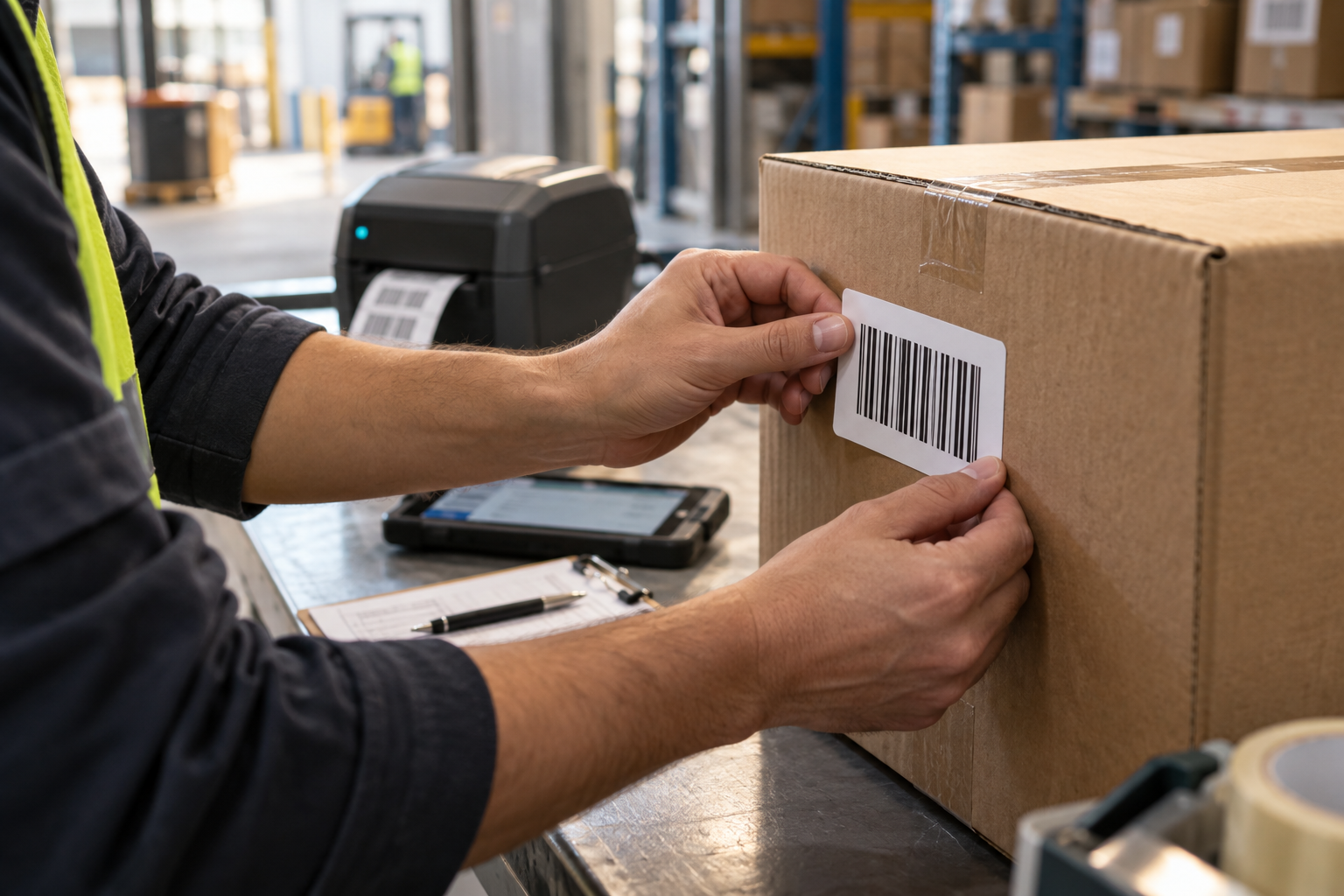
After approval, send carton labels to a connected barcode printer. Apply each label to the matching carton, keeping it flat and readable; scan a label to confirm that it opens the correct carton and receipt record.

Move the cartons into their assigned warehouse racks. Scan or enter each carton identifier and its actual rack/bin location, then confirm put-away. An approved GRN records receipt; the recorded location completes the journey and helps colleagues find the goods later.
Mobile coordinates the workflow. A printer produces the labels, and people and handling equipment still move goods through the warehouse. The aim is less repeated entry and more time for accurate checks, clear exceptions and reliable inventory records.
Proof-of-concept note: This workflow has been tested as a proof of concept (POC). Implementation in a live warehouse requires adapting and validating it against your own operational needs, systems and working conditions. The POC demonstrates the idea; results will depend on the implementation.
Original AI-generated illustrations use fictional warehouse scenes and no real customer data. Series starting point: Think Out of the Box.
Explore the series
- Why Move a Box Just to Read Its Label?
- Snap a PO Document. Let AI Prepare Your PO Entry.
- Snap a CIPL. Let AI Prepare Your GRN Entry. (you are here)